What We Do
We offer Digital Learning Solutions with our E-learning Programs

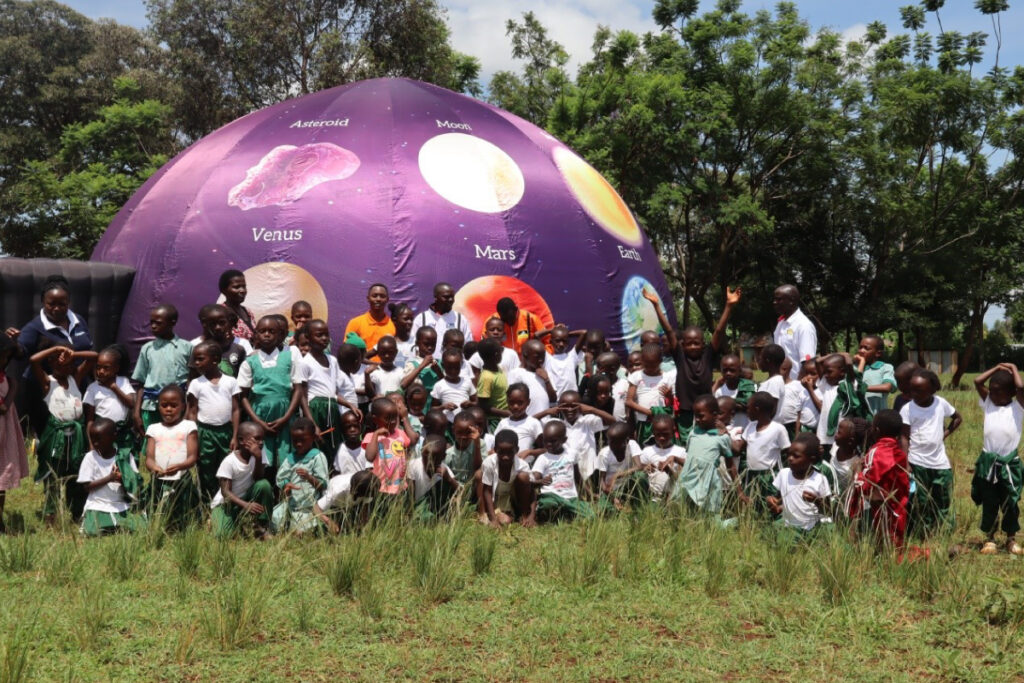
We bring Science, Technology, Engineering, and Mathematics (STEM) out of the classroom and into exciting real-world experiences. Our STEM Festivals are dynamic, hands-on events where learners of all ages explore science and technology through interactive exhibits, challenges, and competitions. These festivals inspire curiosity, critical thinking, and collaboration helping students see how STEM fuels innovation in everyday life.

We believe hands-on learning is a cornerstone of digital literacy and future readiness. Our robotics programs turn learners into creators rather than consumers of technology. Through guided workshops and competitions, students learn programming, engineering design, computational thinking, and automation using real robotics kits and curriculum-aligned projects just like global leaders in educational robotics empower young learners.

Mathematics doesn’t have to be abstract at dSchool World of Learning, we make it intuitive, playful, and powerful. Our math improvisation sessions use games, real-world puzzles, and interactive methods to unlock deeper understanding and math confidence in learners of all levels. These programs help bridge gaps, make complex ideas fun, and boost long-term problem solving.
Whether it’s number sense for younger learners or applied math for older students, we build skills that matter.

Industry Problem
Despite rapid growth in educational technology, many STEM learning experiences remain passive, theory-heavy, and disconnected from real-world application. Students often consume content without meaningful opportunities to build, experiment, or apply concepts, leading to low engagement, limited skill transfer, and a lack of confidence in technology-driven problem-solving especially among younger learners and underserved communities.
While the global EdTech market continues to expand and evolve, many current solutions focus primarily on content delivery or AI-driven personalization rather than meaningful skill development, resulting in limited improvements in student engagement and practical learning outcomes. Although 85% of teachers report that EdTech tools improve engagement, retention rates for online learning remain low (around 25% vs 58% in traditional settings) and many platforms do not translate to deeper conceptual understanding or sustained STEM interest.
Simultaneously, investment in EdTech has declined sharply, dropping to $3 billion in 2024 from a pandemic peak of $17.3 billion in 2021, reflecting market pressures and skepticism about actual impact on learning outcomes.
The Gap
There is a clear gap between technology adoption and high-impact STEM learning. Many tools prioritize adaptive content or admin efficiencies over hands-on, experiential learning, which research shows is essential for developing deep problem-solving skills and innovation mindsets. For example, meta-analyses indicate that educational robotics can produce moderate to strong positive effects on STEM learning outcomes and attitudes, yet access to these experiences is uneven, and traditional content platforms do not bridge this divide.
Other barriers include:
Access and equity challenges, where schools with fewer resources struggle to implement robotics or advanced tech and lack infrastructure.
Educator readiness, as teacher training for effective technology use remains uneven and underemphasized in many implementations.
A disconnect between digital personalization tools and real-world application opportunities that build creativity and resilience.
The Solution
DSchool World of Learning’s model directly addresses this gap with evidence-aligned, hands-on STEM experiences designed to deepen learning and engagement. By integrating project-based robotics, interactive workshops, community STEM festivals, and collaborative school partnerships, the approach encourages learners to design, build, test, and iterate—mirroring the positive impact seen in robotics-enhanced STEM research.
Key elements of the solution include:
Hands-on robotics and maker experiences that research shows have moderate to strong effects on STEM performance and attitudes, increasing relevance and comprehension over passive learning.
Inclusive program structures that reduce barriers to access by partnering with under-resourced schools, providing adaptable low-cost toolkits, and fostering local mentorship networks.
Educator support and professional development to ensure that technology enhances instruction meaningfully rather than simply automating tasks.
Community engagement events that contextualize STEM skills within real challenges, building motivation and long-term interest beyond isolated classroom activities.